

7.23.24 – On-Duty Fatigue
On-Duty Fatigue
Thursday, July 23, 2026
Flight Attendant Fatigue Removal Process – Frequently Asked Questions (FAQ)
This FAQ is intended as a general reference and does not replace the Collective Bargaining Agreement (CBA) or the company’s Fatigue Risk Management policies and procedures.
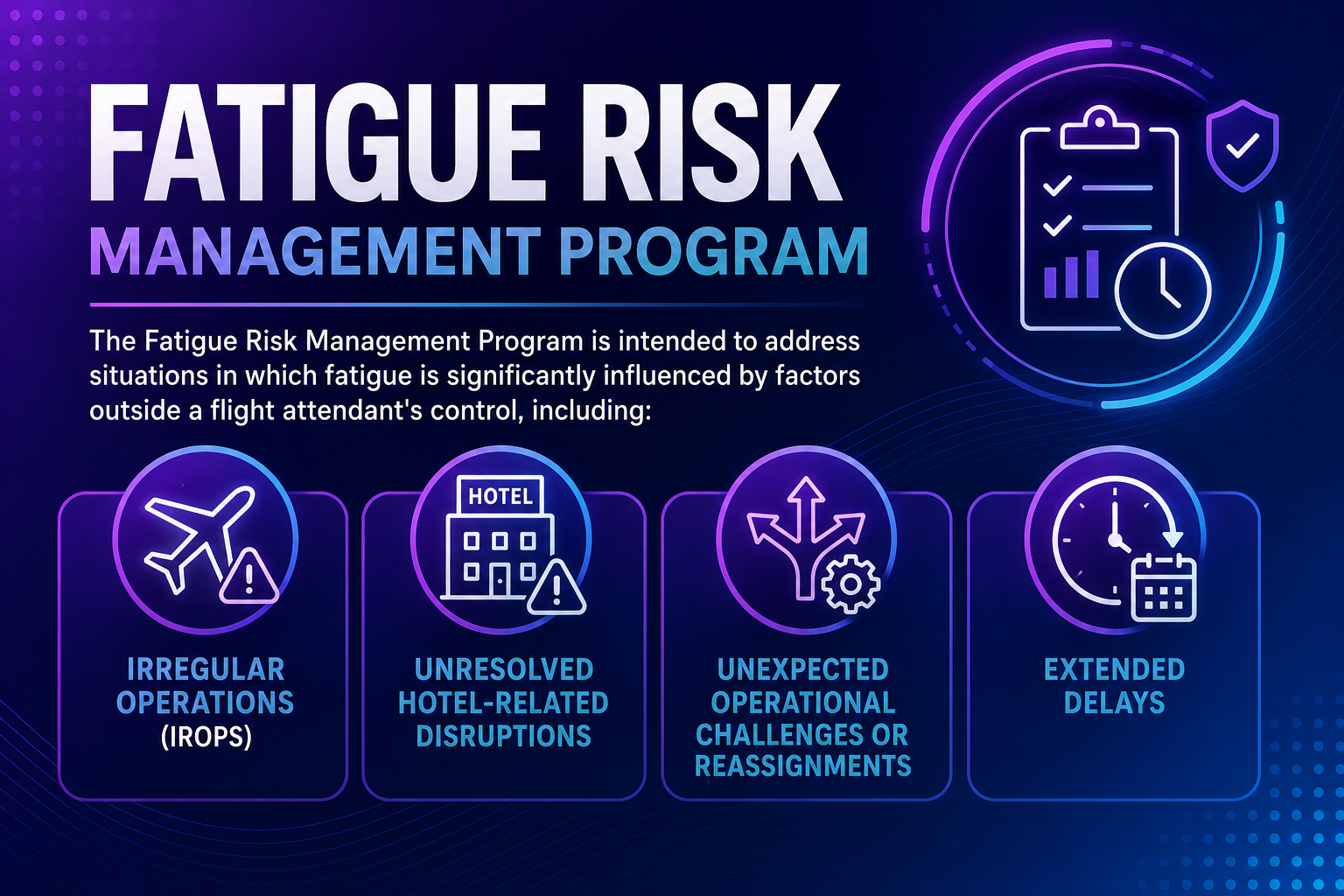
When should I consider calling out fatigued?
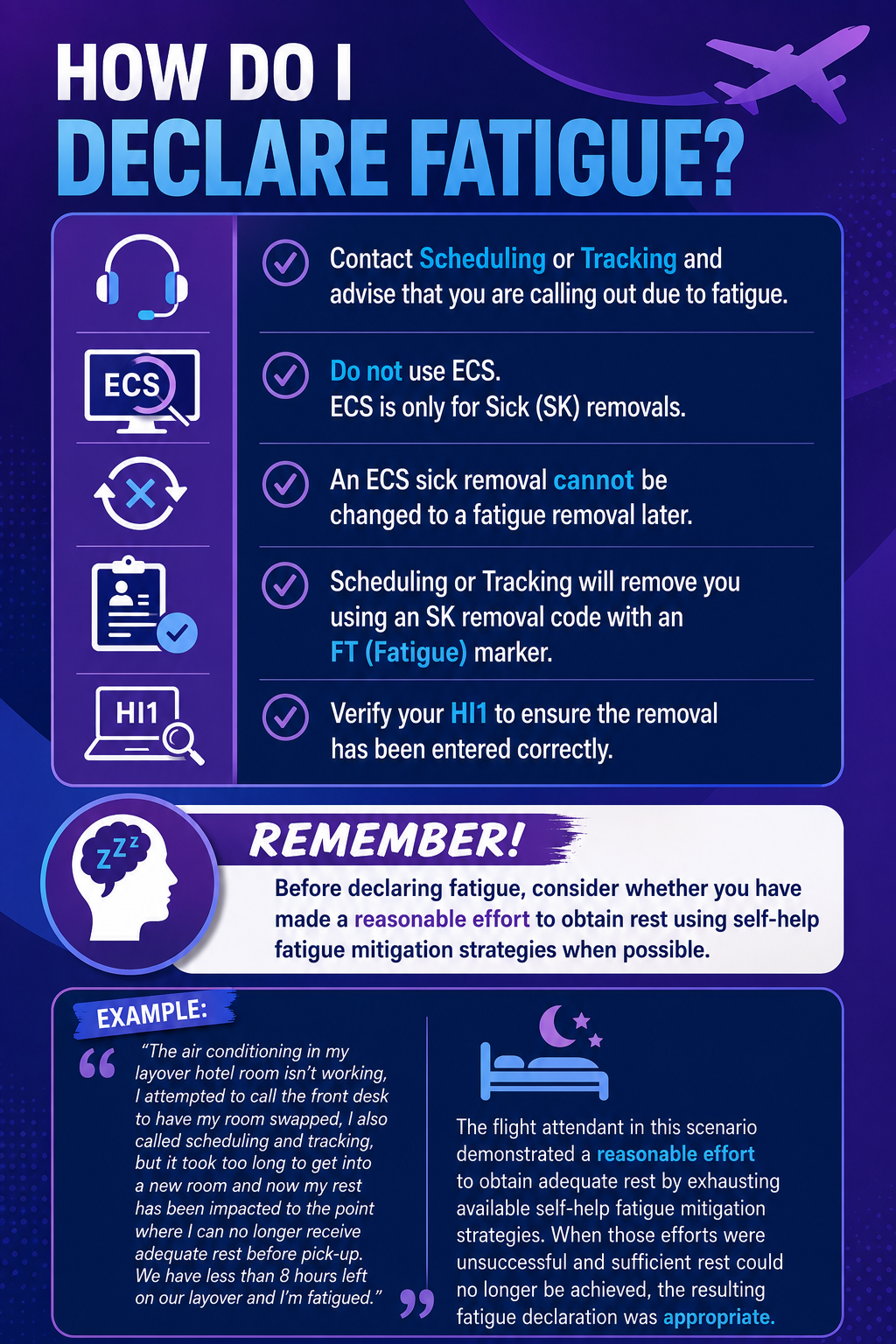
If you are experiencing fatigue that could affect the safe performance of your duties, you should first attempt to obtain adequate rest using appropriate self-help fatigue mitigation strategies. If those measures are unsuccessful and you are still not fit for duty, you may declare fatigue.
What if an IROP, reassignment, or delay is still within contractual limits?
While contractual limits may serve as one factor in assessing the level of fatigue a flight attendant may be experiencing, they do not solely determine the outcome of a fatigue report.
Every fatigue report is reviewed individually, as the circumstances and operational factors surrounding each event can vary significantly.
What issues are considered “non-operational” factors?
Examples of non-operational factors may include:
- Personal health issues
- Commuting challenges
- Personal circumstances
- Inadequate personal rest planning
How will I be paid for a fatigue removal?
Initially, the hours associated with your fatigue removal will be deducted from your sick bank while the fatigue event is under review, and final pay depends on the outcome of the fatigue investigation, this can take up to two weeks or longer.
What do I need to do after calling out fatigued?
Within 48 hours of your fatigue removal, you must complete the required Fatigue Report.
You will typically receive an email at your aa.com address from the Fatigue Event Manager (FEM) system containing a link to the report. If you do not receive the email, you are still responsible for submitting the report by visiting:https://frms.aa.com/
Failure to submit the report within 48 hours will prevent the investigation from being completed and will result in a non-operational determination.
What happens after I submit my report?
The Fatigue Review and Analysis Team (FRAT) will review and investigate your fatigue event.
If FRAT determines the event was Operational:
- Your removal code will be changed to XU.
- You will receive pay protection.
- Any attendance points related to the event will be restored.
If FRAT determines the event was Non-Operational:
The case will be forwarded to the Fatigue Event Review Team (FERT) for a secondary review. FERT will make the final determination.
If the FERT also determines the event was non-operational:
- Your removal will remain coded as SK.
- No pay protection will be provided.
- Any applicable attendance points will remain.
What if I forget to complete the Fatigue Report?
- Simply calling out due to fatigue does not satisfy the program requirements. You must complete the Fatigue Report within 48 hours of your fatigue removal.
- Scheduling and Tracking will not remind you to complete the report when the call out is made.
- If no report is submitted, the event will receive a non-operational determination.
What if I experience fatigue but do not need to call out?
If you remain fit for duty, you are encouraged to submit an Advisory Report through frms.aa.com.
Advisory reports help identify fatigue trends and support improvements to the Fatigue Risk Management Program. Advisory Reports are submitted using the same process as a Fatigue Report.
What happens with hotel-related fatigue reports?
All hotel-related fatigue events, including operational, non-operational, and advisory reports, are shared with the AA Hotel Group in accordance with current Fatigue Risk Management policies and procedures.
Where can I find the Fatigue Process and Reporting Guide?
In Crew Portal, navigate to:
Departments > P&P/ Safety/ Security > Health Resources > FA Fatigue Process and Reporting Guide.
This information is also available at APFA.org.
Reviewing the Fatigue Process and Reporting Guide before declaring fatigue is strongly encouraged.
Quick Reminders
- Attempt appropriate self-help fatigue mitigation strategies when possible before declaring fatigue.
- Contact Scheduling or Tracking to declare fatigue.
- Do not use ECS for fatigue removals.
- Complete your Fatigue Report within 48 hours at frms.aa.com, even if you do not receive the automated email.
- Review the FA Fatigue Process and Reporting Guide in Comply before declaring fatigue.
- Submit Advisory Reports whenever you experience fatigue but remain fit for duty. These reports help improve fatigue tracking and the overall Fatigue Risk Management Program.
- Save your Event ID after submitting a Fatigue Report. You may need it if you require additional assistance or want to check the status of your report. For any questions, please contact [email protected].
In Solidarity,
Andrew Rhinehart
APFA National Safety & Security Chair
[email protected]

APFA Headquarters
1004 West Euless Boulevard
Euless, Texas 76040
M-F: 9:00AM - 5:00PM (CT)
Phone: (817) 540-0108
Contract & Scheduling Desk
M-Th: 9:00AM - 5:00PM (CT)
Phone: (817) 540-0108
Live Chat Messaging
Fridays: 9:00AM - 5:00PM (CT)
Currently, no scheduled events...