

Government Affairs
Legislation
Issues We Are Fighting For
Fighting FAA Minimum Widebody Crew Reduction
The FAA’s role as a global leader in aviation safety demands vigilance, not complacency. Safety on widebody aircraft demands one trained Flight Attendant positioned at each emergency exit door ready to spring into action. Our industry cannot allow profit margins to dictate safety margins.
Our focus should be on saving lives, not saving pennies. Passengers deserve better. And Flight Attendants deserve the right to perform as they are trained to do—to save lives in those seconds that matter most. The FAA must act now to restore full integrity to our aviation safety standards.
Read the CBS News article 'Sens. Duckworth, Baldwin call on FAA to study impact of reduced flight attendant staffing' - May 15, 2026
5.20.26 – Senators Duckworth and Baldwin Scrutinize FAA Minimum Crew Standards
APFA Immediately Challenges 787-9P Minimum Crew Staffing Changes; How Does This FAA Minimum Crew Reduction Affect Our Competitors?; Was the Boeing 787 ever certified with a live, full-scale evacuation?; How Does the Minimum Crew Reduction Affect Our Profession?
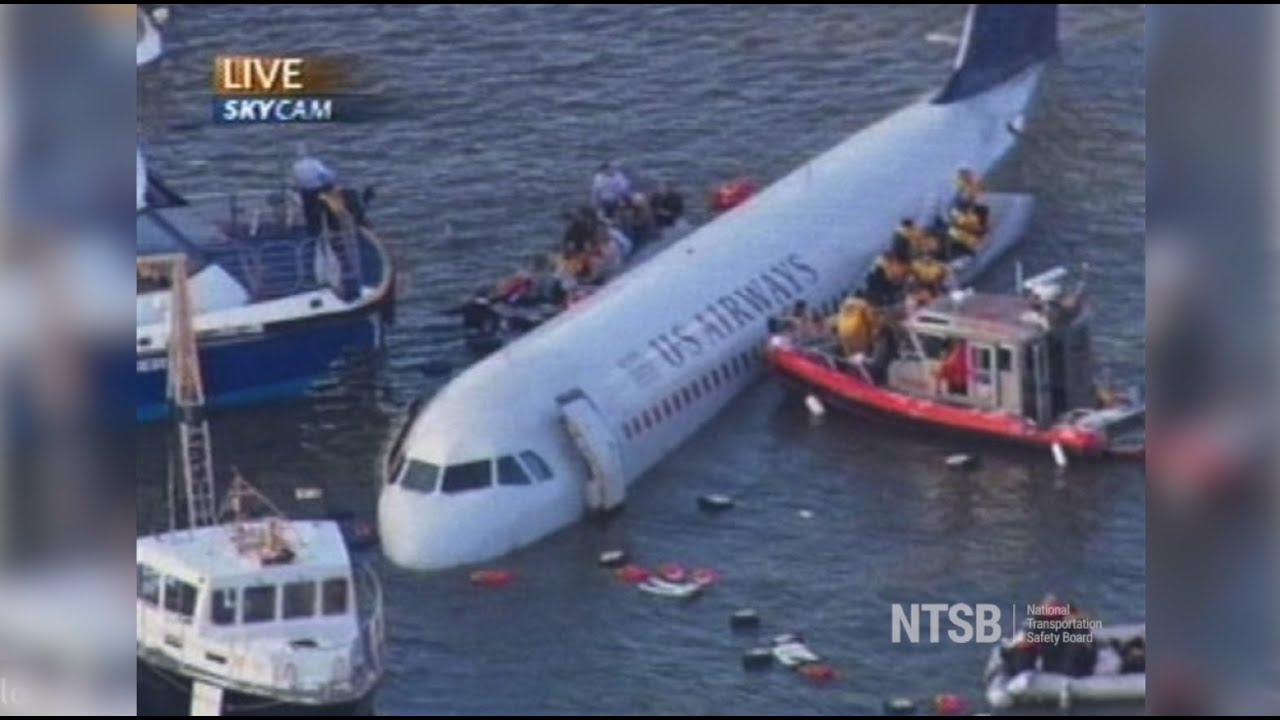
1.15.26 – 17 Years Ago Today: US Airways Flight 1549, ‘Miracle on the Hudson’
Today marks the 17th anniversary of US Airways flight 1549, known as the “Miracle on the Hudson’. Denise Lockie, a passenger and survivor of the flight, is joining with APFA in calling for airlines to staff a well-trained Flight Attendant at every dual-aisle widebody aircraft exit
1.15.26 – Denise Lockie, ‘Miracle on the Hudson’ Survivor, Joins APFA to Oppose FAA Minimum Crew Reductions
Seventeen years ago today, US Airways flight 1549 made an emergency water landing in the icy waters of the Hudson River after losing thrust in both engines due to a bird strike shortly after takeoff from New York’s LaGuardia Airport.
1.14.26 – ‘Miracle on the Hudson’ Survivor Denise Lockie Joins APFA to Stand Against FAA-Authorized Minimum Flight Attendant Crew Cuts
Denise Lockie, a passenger and survivor of the flight that became known as the ‘Miracle on the Hudson’ and a dedicated aviation safety advocate, is joining with the APFA in calling for airlines to staff a well-trained Flight Attendant at every dual-aisle widebody aircraft exit
12.17.25 – U.S. House Representative Chuy García (D-IL-4) Addresses FAA Minimum Crew Reduction
On Tuesday, FAA Administrator Bryan Bedford testified before the House Subcommittee on Aviation in his first appearance before Congress. The hearing, titled The State of American Aviation, allowed members of the subcommittee to question the Administrator
12.02.25 – APFA Continues Efforts to Correct FAA Minimum Crew Reduction on Widebody Aircraft
APFA continues to engage with lawmakers to emphasize the serious safety risks associated with FAA-approved minimum crew levels that do not require a Flight Attendant at every widebody emergency exit door.
10.13.25 – APFA Leads the Push for Stronger Minimum Crew Standards on Capitol Hill
APFA Representatives were on Capitol Hill last week meeting with Members of the U.S. House of Representatives, including those on the Transportation and Infrastructure (T&I) Committee, the Aviation Subcommittee, and the Aviation Safety Caucus.
8.06.25 – Lawmakers Press FAA on Updated Standards after Evacuation of AA3023 – Take Action Today
On Saturday, July 26, 2025, American Airlines Flight 3023 experienced a landing gear fire during takeoff from Denver International Airport, prompting an aborted takeoff and emergency evacuation on the runway.
7.28.25 – Safety First – One Flight Attendant Per Widebody Door
APFA continues to sound the alarm regarding the recently recertified 787-9P, which is now operated with a minimum crew of just seven (7) Flight Attendants. For the safety of passengers in an emergency evacuation, a Flight Attendant must be present
7.01.25 – APFA Calls on CEO Isom to Prioritize 787-9P Safety Over Operational Convenience
Today, APFA National President Julie Hedrick sent a formal letter to American Airlines CEO Robert Isom and Vice President of Safety and Regulatory Compliance Cedric Wilson, expressing APFA’s serious concerns
Issues We Are Fighting For
Legislative History
2025
APFA pushed back on the airline industry and the FAA for reducing minimum crew on widebody aircraft.
APFA collaborated with the National Academies to study the impacts of cabin temperature and radiation exposure on flight crew safety, as directed by the FAA Reauthorization Act of 2024
July 2024
Acting Secretary of Labor Julie Su instrumental in helping APFA secure a Tentative Agreement
June 2024
APFA members lobbied their Senators to sign a letter to the National Mediation urging them to set deadlines under the Railway Labor Act. 33 Senate Democrats signed the letter.
May 2024
APFA members picket at the White House in support of being able to exercise our right to strike.
APFA members call, write, and visit Congress urging their Representatives to sign a bipartisan letter that urges the National Mediation Board to set deadlines under the Railway Labor Act. 179 U.S. House Representatives signed the letter.
The “FAA Reauthorization Act of 2024” becomes law. The bill addresses Flight Attendant concerns including cabin air quality, cabin temperature minimums and maximums, radiation exposure, pumping in flight, emergency evacuations, inflight violence, turbulence, inflight medical kits, and more.
July 2023
The U.S. House of Representatives is the first chamber to pass the FAA Reauthorization Bill which addresses Flight Attendant concerns including cabin air quality, cabin temperature minimums and maximums, radiation exposure, pumping in flight, emergency evacuations, inflight violence, turbulence, inflight medical kits, and more.
April 2023
The APFA Negotiating Team flies to Capitol Hill to brief Senators and Representatives in districts with high concentrations of APFA constituents about our contract negotiations.
March 2023
APFA member Pete Enriquez speaks at a press conference at the U.S. Capitol in support of the Protection from Abusive Passengers Act. Pete recounts a violent assault that occurred to him while working a flight
2022
FAA Acting Administrator Billy Nolen signs the 10-hour minimum FAR rest for Flight Attendants into law. The regulation was passed in 2018 as part of the FAA Reauthorization Bill but implementation had been delayed.
2021
APFA Flight Attendant Teddy Andrews testifies before Congress on physical and verbal abuse from disruptive passengers. APFA supports DOT’s Zero-Tolerance Policy against unruly passengers and increased fines for Flight Attendant assault. APFA also pushes the DOT to refer cases of Flight Attendant assault to the FBI for criminal review.
2020
APFA advocates for the Payroll Support Program (PSP) as part of the CARES Act. The PSP funding keeps the airlines afloat during the coronavirus pandemic, however, aviation Labor Unions weigh in with lawmakers to ensure any government aid would go directly to continued wages and healthcare benefits for frontline workers. The PSP prevents worker furloughs as well as prohibits stock buybacks and limits executive compensation. T&I Chair Peter DeFazio champions the PSP
After countless safety-related incidents on the airplane, the DOT announced that they will revise the Air Carrier Access Act (ACAA) regulation on the transportation of service animals. A service animal is now defined as a trained dog that can perform tasks for the benefit of a person with a disability. Emotional support animals are no longer considered to be a service animal, a loophole that has been often exploited.
2019
APFA brings 50 Flight Attendants to Washington to lobby Congress on cabin safety issues, including implementation of the 2018 FAA Bill and the state of our contract negotiations. Chair Peter DeFazio continues to be our major ally in implementing the 10-hour minimum rest regulation
APFA National President Lori Bassani testifies before House Aviation Subcommittee on various issues that Flight Attendants face, including FAA oversight, seat size and evacuation standards, cabin air quality, emotional support animals, 10-hour minimum rest, and the Boeing 737 MAX.
The Boeing 737 MAX aircraft is grounded worldwide after 346 people died in two crashes (Lion Air Flight 610 and Ethiopian Airlines Flight 302). APFA joins pilots and Labor partners in taking a hardline on aviation safety and government oversight.
A 35-day government shutdown ends as TSA and air traffic control workers have continued to work without pay. APFA and Labor partners are involved in pressuring lawmakers to re-fund and re-open the government to ensure aviation safety is not compromised.
2018
In advance of the passage of the 2018 FAA Bill, APFA brings 50 members to Washington to lobby Congress on cabin safety issues.
The 2018 FAA Reauthorization Bill passes nearly unanimously with bipartisan support. The bill includes provisions to increase the minimum Flight Attendant rest to 10 hours, address toxic fume (cabin air quality) events in the cabin, and study emergency cabin evacuation standards considering various emerging factors of modern air travel.
2017
APFA brings Flight Attendant to Washington to lobby on the Fair & Open Skies issue. Three Middle Eastern air carriers receive government subsidies that threaten U.S. aviation jobs by creating an unlevel playing field.
APFA supports the FCC’s decision to ban voice calls on all U.S. commercial flights.
2016
Flight Attendant Fatigue. After years of studies, unions gain lawmakers support in addressing Flight Attendant fatigue.
2014
Voice Calls on Planes: Unions convince lawmakers to file legislation to keep voice calls off of planes. APFA provides testimony at the FAA.
APFA is appointed to the Air Carrier Training Aviation Rulemaking Committee (ACT ARC)
2013
Human Trafficking APFA Flight Attendant Juan Carlos Ayub, DCA, attended an event on human trafficking awareness hosted by retired AA Flight Attendant Nancy Rivard. APFA asks all Flight Attendants to be vigilant and help combat this serious problem.
AA Flight Attendants have been leafleting in front of airports across the nation to notify passengers that we are against knives on board the aircraft.
APFA applauds that some Occupational Safety and Health protections will apply to Flight Attendants working on commercial aircraft. The Federal Aviation Administration (FAA) and the Occupational Safety and Health Administration (OSHA) finalize a policy statement that corrects a nearly four-decade-old exclusion of OSHA in the passenger cabin.
2012
Flight Attendants Gain OSHA Protections. After 14 long years, the FAA bill contains language that designates the aircraft cabin as a work environment and under of Occupational Safety and Health Administration (OSHA) and the FAA.
No Knives on Planes! Through Flight Attendant legislative efforts we are able to convince TSA to reverse this ill-advised plan to allow knives back on board our aircraft.
Pensions in Bankruptcy: APFA, along with the other unions, save pensions from termination and being turned over to the PBGC for LAA FAs during bankruptcy.
2010
Coalition of Flight Attendant Unions Implore Congress to Pass Key Flight Attendant Provisions in the FAA Reauthorrization Bill - 9.01.10
Negotiations Update Letter sent to Congress - 6.28.10
Members of Congress write Gerard Arpey urging contract settlement
Federal Advisory Committee Charter – Future of Aviation - April 2010
APFA President updates Congress on the state of our talks - 2.10.10
2009
Family Medical Leave Act (FMLA) Technical Corrections Bill is passed. It guarantees crewmembers are now able to qualify for time off work. The original bill did not provide for our unique hourly pay structures.
Flight Attendant Classification: The Department of Labor reclassifies Flight Attendants from “personal care providers” to “essential transportation workers,” the same classification assigned to pilots and air traffic controllers.
Letters from APFA President to Congress regarding November 18 Informational Picketing - 11.06.09
AA ATI support letters to DOT and European Commission - 10.29.09
DEMOS report - “Flying Blind: Airline Deregulation, 30 Years Later" - 6.25.09
Download/read the Demos report here
2004
Flight Attendant Certification: The Federal Aviation Administration (FAA) recognizes Flight Attendants as onboard safety professionals, validating our role in public safety and as aviation security professionals.
2000
Penalties for Air Rage: Fines are increased from $1,200 up to $25,000 for air rage attacks by passengers against Flight Attendants.
1997
Smoking is Banned. Largely due to Flight Attendant efforts, smoking is banned on all commercial aircraft.
1994
Flight Attendant weight requirements end after multi-year battles and lawsuits with the United States Equal Employment Opportunity Commission.
1979
Pregnancy Discrimination Act. Allows women to return to work without losing their jobs. Flight Attendants had previously been unfairly discharged.
1972
Sex Discrimination Against Men. The law covering Title VII was changed to allow the hiring of male Flight Attendants, striking down sex discrimination.
1964-1968
Flight Attendants as Pioneers. It is widely recognized that Flight Attendants led the charge in addressing workplace discrimination. Following the Age Discrimination Act of 1967, the Equal Employment Opportunity Commission (EEOC) enforces the ruling that bans age (aka Rule 32) and marriage discrimination against stewardesses.
Achievements
APFA Headquarters
1004 West Euless Boulevard
Euless, Texas 76040
M-F: 9:00AM - 5:00PM (CT)
Phone: (817) 540-0108
Contract & Scheduling Desk
M-Th: 9:00AM - 5:00PM (CT)
Phone: (817) 540-0108
Live Chat Messaging
Fridays: 9:00AM - 5:00PM (CT)
Currently, no scheduled events...